Festivals & Rites
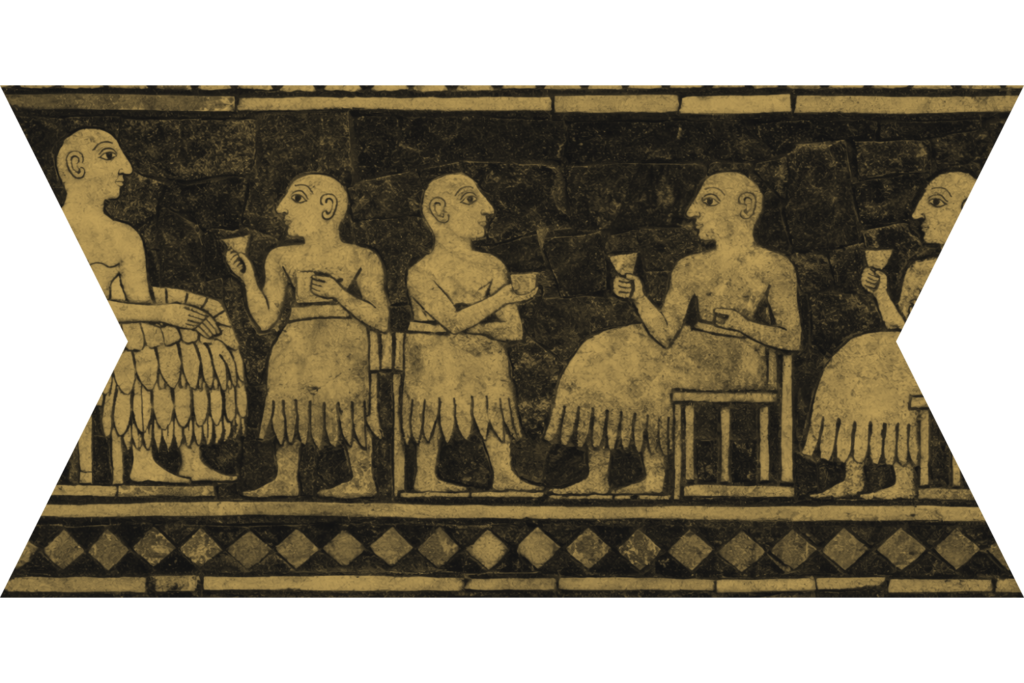
The Sumerian festival calendar marked each rite as a living relationship between the city, its patron Gods and the forces that shaped prosperity, order, and fate. Festivals were moments where the divine and human world came together through offerings, symbolism and ceremony. What follows is an overview of the major rites, their core principles and how they were observed.
The most widely celebrated festival of the Sumerian world was the Sacred Marriage Rite, held at the new year during Zagmuk (pronounced ‘zag-mook’). Records place this rite at the Eanna Temple “House of Heaven” in Uruk, where Inanna was honoured as the city’s patron deity.
Across Sumerian and later Babylonian city-states, the major temples maintained daily offerings and sacrifices, most commonly food and incense, as acts of devotion to the Gods. For the Ensi (temple governors and Priests), holy observances were typically recognised on the 1st, 7th and 15th day of each month, while feast days and regional festivals were known to vary city to city.
During festival periods, sacred symbols were displayed with purpose. Among these was the Caduceus: intertwining serpents representing male and female counterparts. Their intertwining symbolised the sacred union, an act fully embraced as a spiritual principle within Sumerian ritual life.
Festivals were marked by feasting, drinking and communal unity. Divine Priests served as the vessel through which the Gods spoke, either directing the rite through presence and power, or delivering prophecy to the congregation. High Priests were known to oversee temple structure, maintain ritual order and train initiates for full integration into temple life. True channelling however was reserved for the Divine Priest alone, representing the living medium between Heaven and Earth.
The type of festival held was often characterised by six key factors:
° Phases of the moon
° Annual agricultural cycle
° Equinoxes and solstices
° Mythos of the city and its divine patrons
° Success of the reigning monarch
° Commemoration of historical events